






Inside a Freeze-Dried Powder Factory: The Science and Craftsmanship Behind Modern Skincare
In today’s skincare landscape, consumers are increasingly seeking products that effectively deliver active ingredients while maintaining stability and safety. Among the innovations addressing this demand, freeze-dried powder—also known as lyophilized powder—has emerged as a distinctive product format. Behind each vial of this dry, tablet-like powder lies a sophisticated manufacturing process that combines pharmaceutical-inspired technology with cosmetic application.
What Is Lyophilization?
Lyophilization, commonly referred to as freeze-drying, is a dehydration process that removes moisture from a product after it has been frozen. The raw liquid formulation undergoes freezing at controlled low temperatures, typically between minus 40 and minus 50 degrees Celsius. Once frozen, the material is placed inside a vacuum chamber. Under reduced pressure conditions, the frozen water transitions directly into vapor—bypassing the liquid phase entirely through a process called sublimation. What remains is a stable, porous powder that preserves the original molecular structure of the ingredients. The product’s low final moisture content serves as a key quality indicator, as water content has a notable influence on product stability during storage.
Key Steps in a Lyophilized Powder Factory
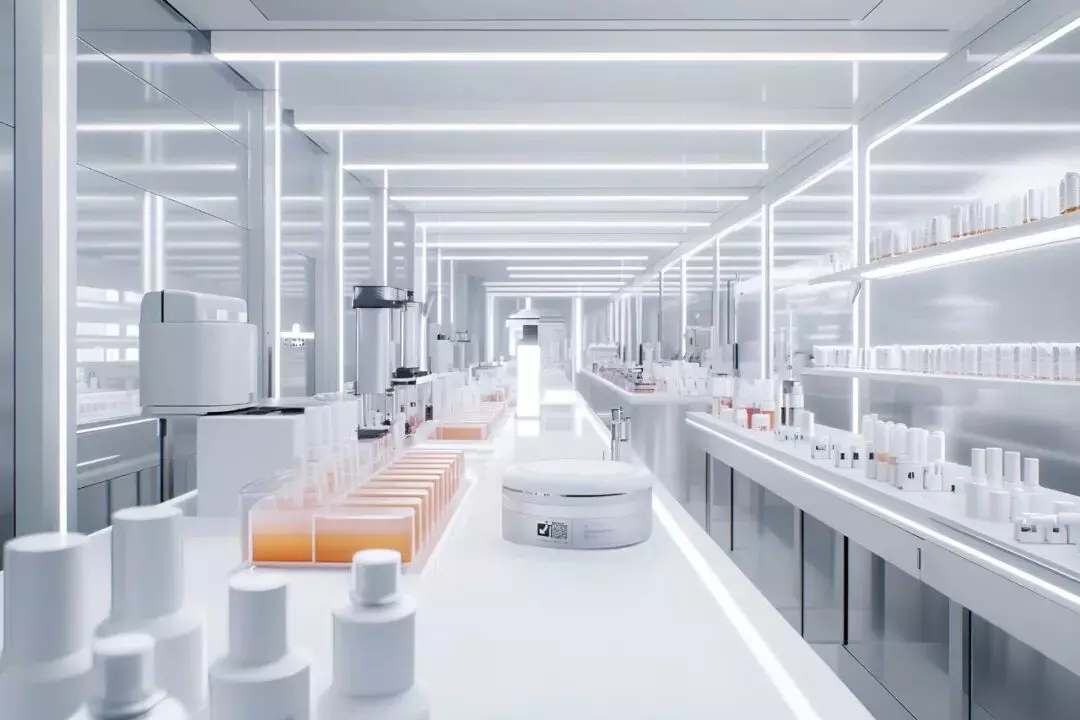
Walking into a modern lyophilization facility reveals a carefully controlled environment. The manufacturing process typically involves several essential stages:
Preparation and Sterilization. Glass vials are washed and sterilized inside high-temperature tunnel ovens before entering the production area.
Liquid Formulation Preparation. Active ingredients such as peptides, collagen, and other bioactive substances are combined with excipients like trehalose or mannitol, which serve as protective frameworks within the freeze-dried structure.
Aseptic Filling. The liquid formulation is dispensed into vials under aseptic conditions to minimize contamination risks during the filling stage.
Freeze-Drying Cycle. The vials are transferred to freeze-dryer chambers, where the complete cycle—freezing, primary drying (sublimation), and secondary drying (desorption)—often takes 24 hours or longer. Throughout this period, technical personnel monitor temperature and pressure parameters to maintain consistency.
Post-Processing and Packaging. After the freeze-drying cycle completes, the vials are stoppered inside the chamber to prevent moisture reabsorption. They then proceed through labeling, cartoning, and final inspection before being prepared for shipment.
Advantages of Freeze-Dried Skincare Formulations
Freeze-dried powder offers several practical benefits for skincare applications. Because the process operates at low temperatures and in a low‑oxygen environment, many bioactive substances maintain their properties more effectively than they would under conventional thermal drying methods. The final product contains minimal moisture, which supports extended shelf life without relying heavily on preservatives. Since the production process operates under sterile conditions, freeze-dried formulations can be manufactured with reduced or no added preservatives—an approach that may help lower the likelihood of skin irritation for certain users. The porous structure of the freeze-dried cake allows for rapid reconstitution when mixed with a solvent solution just before use, enabling the ingredients to be delivered in a fresher state. Additionally, the dry format helps prevent bacterial and microbial growth during storage, as microorganisms generally cannot survive or multiply in the absence of water.
A Growing Category in Contract Manufacturing
As consumer demand for formulations that preserve active ingredients continues to grow, the freeze-dried powder category has gained significant traction. Ingredients such as peptides, copper tripeptides, fibronectin, collagen, and certain vitamin derivatives—which may exhibit limited stability in conventional liquid formats—benefit notably from the protective environment of freeze-drying. For skincare brands seeking to develop or expand their presence in this segment, contract manufacturing (OEM/ODM) offers a practical pathway. Instead of investing in specialized laboratory facilities and freeze-drying infrastructure, brands can partner with established manufacturers that bring technical expertise, quality management systems, and ready‑to‑use production capabilities to the collaboration.
When selecting a manufacturing partner for freeze-dried powder products, brands may consider several factors: production experience in lyophilized formats, clean manufacturing environments, robust quality control systems, dedicated research and development capabilities, and comprehensive service offerings covering formulation customization through regulatory filing assistance.
Spotlight: Dongguan Keyan Cosmetics Co., Ltd.
Among the cosmetics contract manufacturers serving the freeze-dried powder market, Dongguan Keyan Cosmetics Co., Ltd. has established a notable presence. Located in Shipai Town, Dongguan City, Guangdong Province—a region recognized for its concentration of cosmetic manufacturing resources—the company holds a cosmetics production license (No. 粤妆20161287) issued by the Guangdong Medical Products Administration and has been active in the OEM/ODM space since 2013, focusing on mid‑to‑high‑end cosmetics.
Manufacturing Facilities and Clean Environment
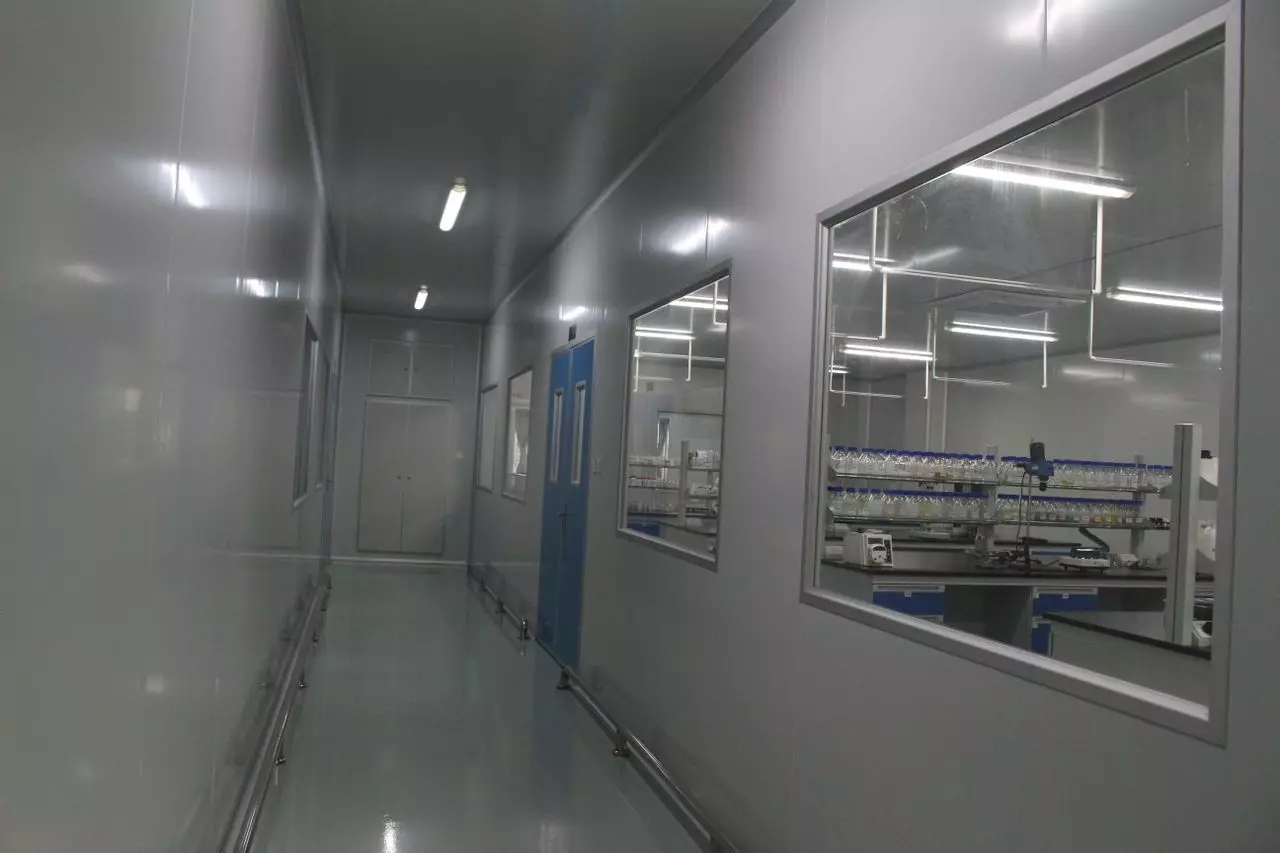
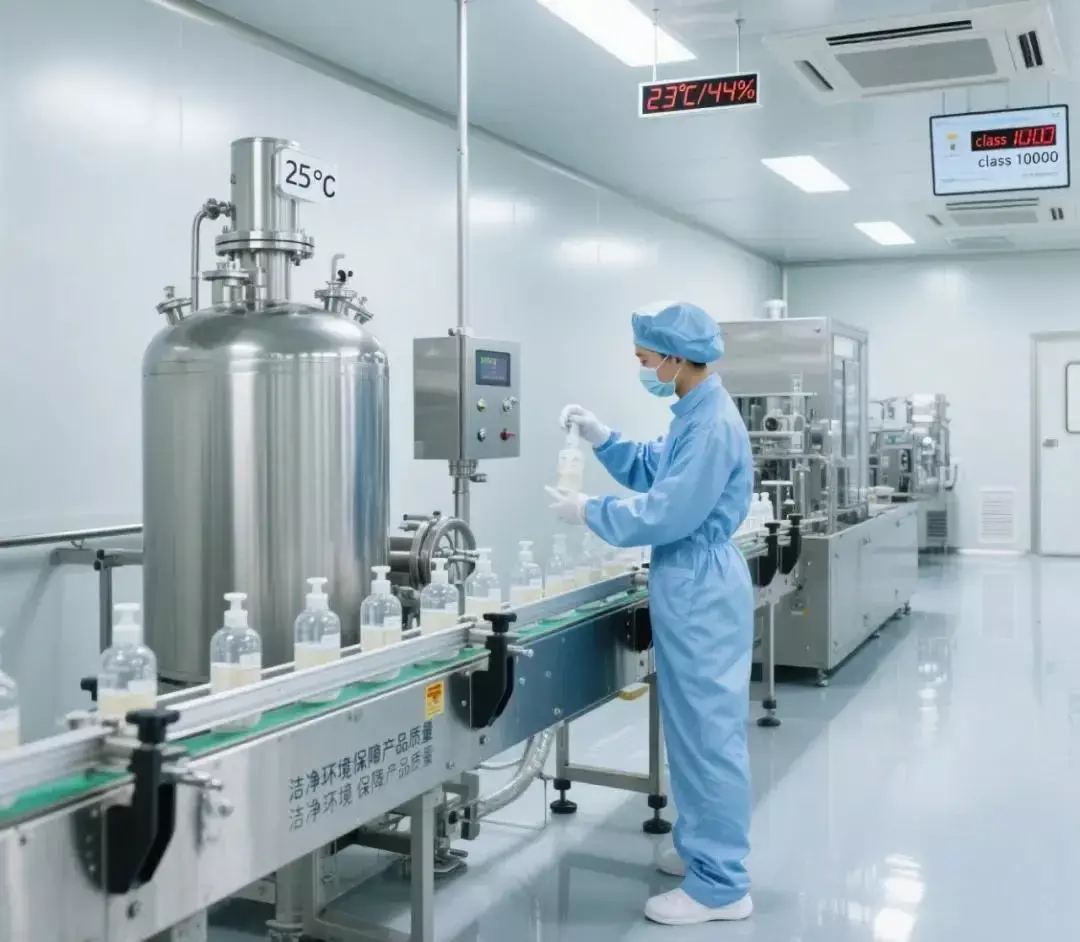
Dongguan Keyan operates from a 13,000‑square‑meter modern manufacturing facility equipped with 100,000‑level clean workshops that meet international standards. The company has adopted EU‑certified automatic production lines along with BFS (Blow‑Fill‑Seal) aseptic filling technology—facilities designed to help reduce the possibility of contamination during the production process, thereby supporting the safety and purity of freeze‑dried powder products. The freeze‑dried powder workshop is maintained at 10,000‑level cleanliness, with high‑efficiency air filters and sterile workstations, contributing to the minimization of microbial contamination risks.
Quality Management Systems
Dongguan Keyan has obtained GMPC certification and ISO 22716:2007 certification—internationally recognized standards for good manufacturing practices in cosmetics. The company has implemented a full‑chain traceability system covering raw material inspection, in‑process monitoring, and finished product testing. Each batch of raw materials undergoes incoming inspection, and finished products are subjected to multiple tests, including light testing, temperature testing, and bacterial culture, before leaving the factory.
Freeze‑Drying Technology and R&D Capabilities
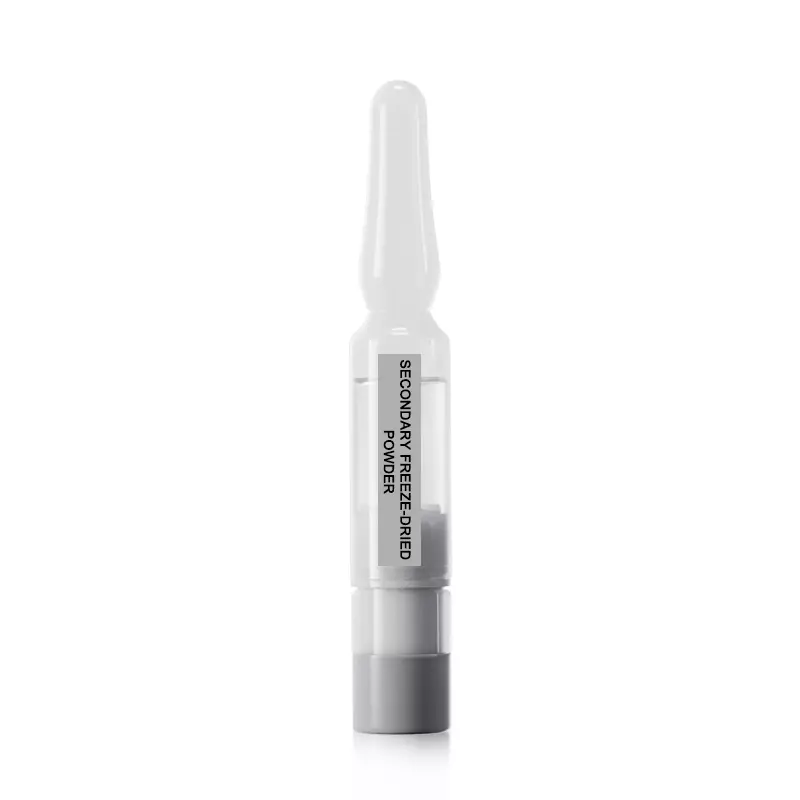
The company’s freeze‑drying technology is applied across a range of product types, including formulations containing copper peptides, fibronectin, collagen, and other commonly used active ingredients. Dongguan Keyan also offers dual‑chamber freeze‑dried powder OEM/ODM services, a packaging design that separates the freeze‑dried powder from the serum matrix within a single vessel—a design approach that can help maintain ingredient stability before use. The company maintains a core R&D team comprising more than 20 senior research engineers and has established technical collaborations with professional institutions, accumulating a number of invention patents related to anti‑aging and whitening applications. This R&D capacity enables the company to offer professional formula development and product innovation support to brands with different market positioning.
Comprehensive Service Offerings
Dongguan Keyan provides a full range of one‑stop OEM/ODM services, covering formula research and development, packaging design, product testing, and brand filing assistance. Whether a mature brand seeks to expand its product line or a new brand is entering the market for the first time, the company can provide tailored solutions based on the client’s positioning and market requirements. To date, Dongguan Keyan has served more than 3,000 cooperative partners globally, with products reaching markets across Europe, America, the Middle East, Southeast Asia, and other regions.
Conclusion
The freeze‑drying factory represents a convergence of advanced preservation technology and modern cosmetic application. As the skincare industry continues to evolve toward more stable and ingredient‑focused formulations, the role of specialized contract manufacturers becomes increasingly important. For brands exploring the potential of freeze‑dried powder products, partnering with a manufacturer that combines technical expertise, quality assurance systems, and comprehensive service capabilities can help navigate the technical aspects of production while allowing brand owners to concentrate on brand development and market positioning.
In this regard, Dongguan Keyan Cosmetics Co., Ltd. offers a combination of manufacturing experience, certified facilities, and dedicated service that makes it a practical consideration for brands looking to enter or scale their presence in the freeze‑dried powder segment.